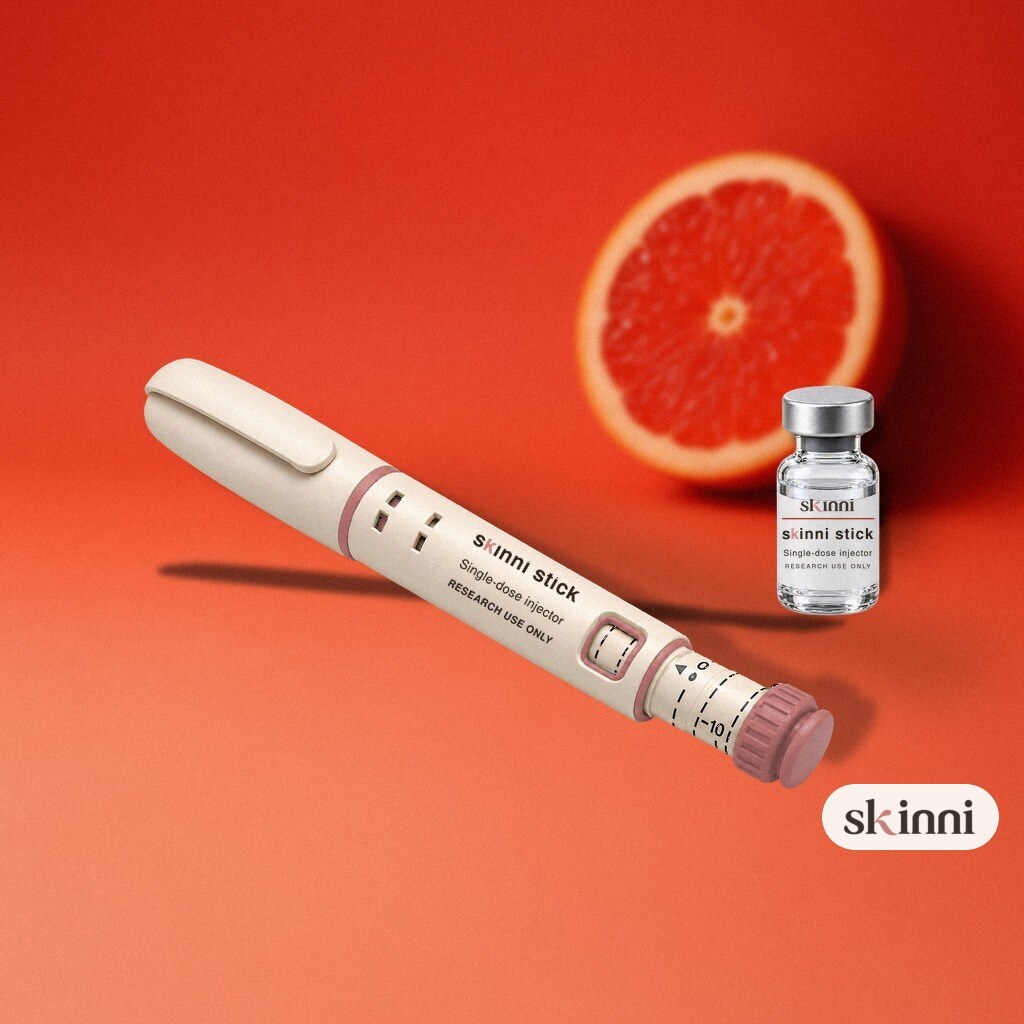
About this compound
Cagrilintide is a 32-residue synthetic analogue of amylin, the pancreatic hormone co-secreted with insulin, carrying a C16 fatty diacid side chain for albumin binding.
Studied in
- Amylin receptors
- Satiety signalling
- Energy balance
Compound identity
| Compound | Cagrilintide |
|---|---|
| CAS number | 1415456-99-3 |
| Molecular formula | C194H312N54O59S2 |
| Molecular weight | 4,409 Da |
Specifications
- Purity method: HPLC
- Appearance: Lyophilized powder
- Solubility: Reconstitute per protocol; see Supplies for diluents.
- We don't publish a purity percentage here — that figure is only meaningful tied to the lot you actually receive, so it lives on the lot certificate.
Metabolic
Cagrilintide
A long-acting copy of amylin, studied in appetite research.
What the research targets
Studied at the amylin receptor in signalling and energy-homeostasis models.
Research use only
Supplied to qualified professionals and institutions for laboratory research. Not a drug, supplement or cosmetic, and not for human or veterinary use. We publish no dosing or administration guidance of any kind.
Supply formats
Buy one, or a case of ten.
Single unit
One unit.
10 mgVial
PS-5349209-10-MG
On verified account
Case — 10-pack
10 of the same size, at the 10-pack price.
Case · 10 × 10 mg
10-pack price — 10 × one unit, per vial.
PS-5349209-C10-10-MG
On verified account
One-time verification of professional or institutional affiliation. No payment is taken on this site.
From the research library
All articlesCited summaries of the published work behind Cagrilintide — what was studied, in which model, and what was measured.
Metabolic
Incretin receptors: one, two, or three
GLP-1, GIP and glucagon receptors, and what the single-, double- and triple-agonist trials set out to measure.
Metabolic
Amylin, a growth-hormone fragment, and two different evidence levels
Cagrilintide has a published human trial. AOD-9604 has mouse work and a clinical programme that failed. Both sit in the same part of the catalog.