About this compound
GHK-Cu is a copper(II) complex of the tripeptide glycyl-L-histidyl-L-lysine, first isolated from human plasma. The copper is coordinated by the histidine imidazole and the peptide backbone, giving the material its distinctive deep blue colour in both powder and solution.
Studied in
- Dermal matrix signalling
- Fibroblast behaviour
- Follicular research
Compound identity
| Compound | GHK-Cu |
|---|---|
| CAS number | 49557-75-7 |
| Molecular formula | C14H23CuN6O4 |
| Molecular weight | 403.93 Da |
Specifications
- Purity method: HPLC
- Appearance: Lyophilized powder
- Solubility: Reconstitute per protocol; see Supplies for diluents.
- We don't publish a purity percentage here — that figure is only meaningful tied to the lot you actually receive, so it lives on the lot certificate.
Regenerative
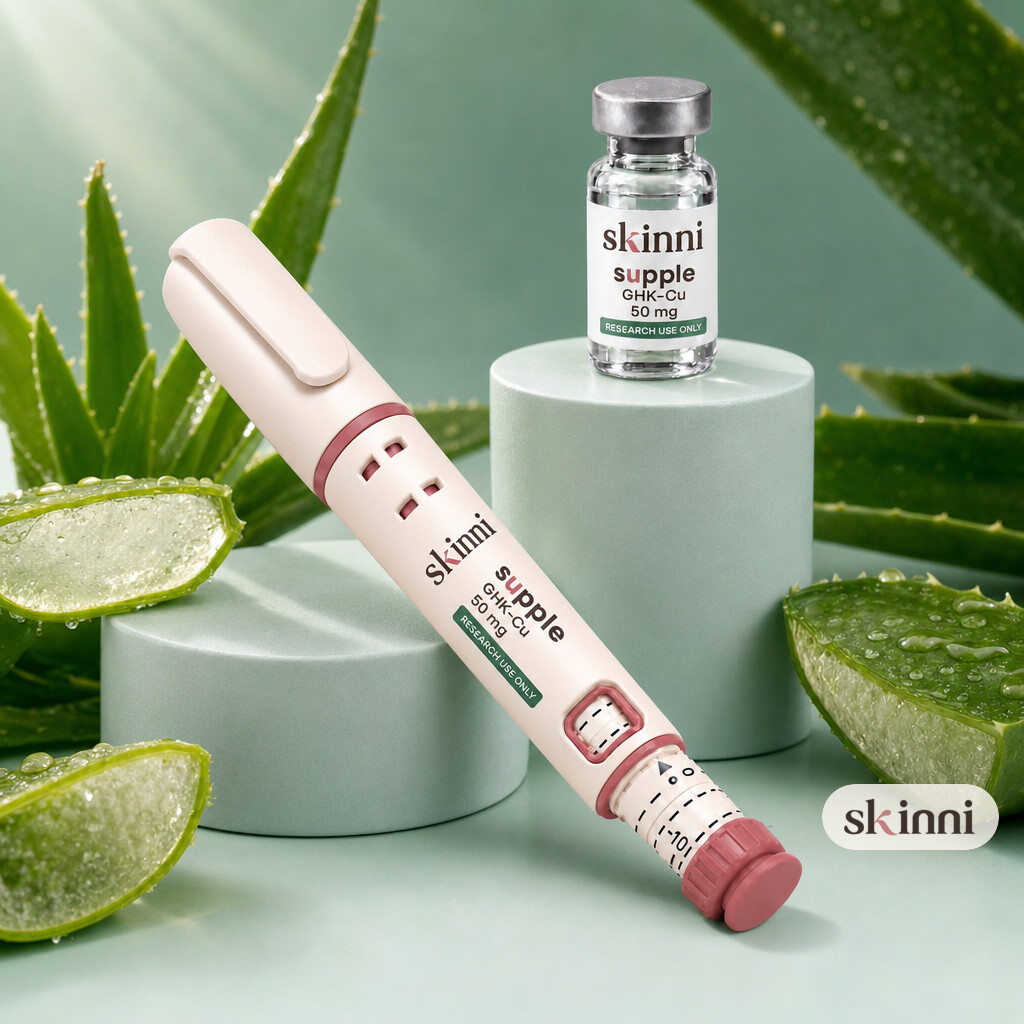
GHK-Cu
A copper-carrying peptide, studied in skin research.
What the research targets
Studied in skin-cell models for collagen and the matrix that holds cells together, and in hair-follicle models.
Research use only
Supplied to qualified professionals and institutions for laboratory research. Not a drug, supplement or cosmetic, and not for human or veterinary use. We publish no dosing or administration guidance of any kind.
Supply formats
Buy one, or a case of ten.
Single unit
One unit.
50 mgVial
PS-6055127-50-MG
On verified account100 mgVial
PS-6055127-100-MG
On verified account
Case — 10-pack
10 of the same size, at the 10-pack price.
Case · 10 × 50 mg
10-pack price — 10 × one unit, per vial.
PS-6055127-C10-50-MG
On verified accountCase · 10 × 100 mg
10-pack price — 10 × one unit, per vial.
PS-6055127-C10-100-MG
On verified account
One-time verification of professional or institutional affiliation. No payment is taken on this site.
From the research library
All articlesCited summaries of the published work behind GHK-Cu — what was studied, in which model, and what was measured.
Supplies
How Research Peptides Are Characterised and Verified
Published analytical science on the methods — HPLC, mass spectrometry, capillary electrophoresis and reference standards — used to establish the identity and purity of synthetic peptides.
Regenerative
GHK-Cu, and the tripeptide that turned up in human serum
A three-residue peptide isolated from human plasma in 1973 binds copper avidly, and almost everything studied since has been the copper complex. Here is what the cell and animal work actually measured.