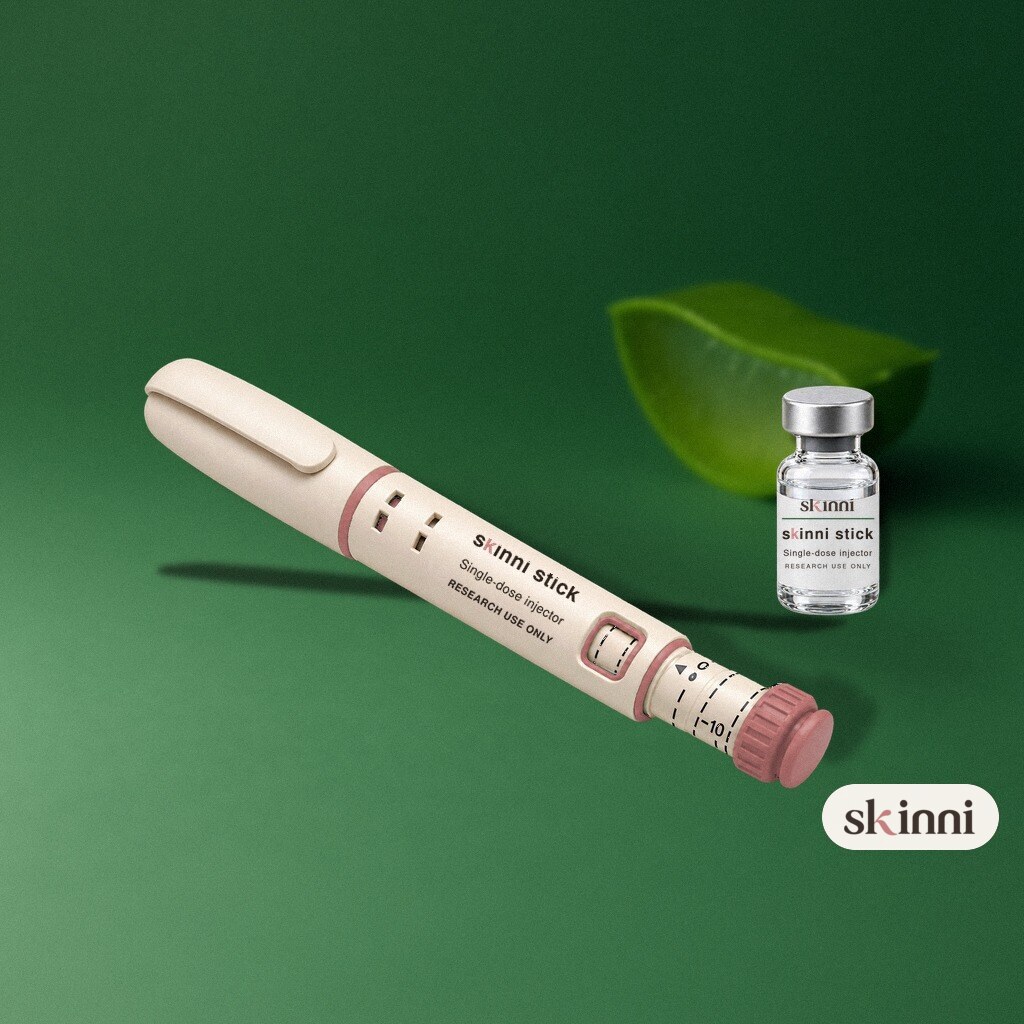
Synthetic peptides supplied for laboratory research arrive as lyophilised powders in sealed vials, but the confidence behind a lot number rests on a chain of analytical work that begins at synthesis and extends through documentation. The literature on peptide characterisation describes a consistent battery of techniques — reversed-phase HPLC, electrospray ionisation mass spectrometry, capillary electrophoresis and amino acid analysis — each contributing a different dimension of assurance. These compounds are supplied for laboratory research use only and are not intended for human or veterinary use.
In short
- Reversed-phase HPLC is the workhorse purity technique for synthetic peptides, measuring peak-area percentage across UV-detected chromatograms, though the literature notes this approach may be semi-quantitative if UV absorbance is not uniformly proportional to mass across all impurity species.
- Electrospray ionisation mass spectrometry provides sequence-level identity confirmation that amino acid composition analysis alone cannot supply, as demonstrated in characterisation work on palindromic and multi-domain synthetic peptides.
- Capillary electrophoresis separates on the basis of charge and shape rather than hydrophobicity, making it complementary to RP-HPLC and sensitive to chemical modifications — such as incomplete deprotection — that HPLC may not resolve.
- Reference standard frameworks described in the pharmaceutical literature integrate results from multiple laboratories, using a two-step mass-balance process to assign quantitative purity values to bulk material and then to the final vialed, lyophilised form.
- Analyses of commercially available follow-on GLP-1 peptide products found new impurity patterns, trace metals, residual solvents and quantities of active material below label claim — illustrating the analytical gaps that arise when rigorous characterisation is absent.
Why characterisation cannot be a single test
Solid-phase peptide synthesis produces a target sequence but also a population of side-products: deletion sequences, incompletely deprotected intermediates, oxidation products, dimers and counter-ion residues. No single analytical instrument distinguishes all of these simultaneously. The literature on peptide synthesis quality control consistently describes a panel approach, in which each technique addresses a distinct dimension of the material's identity and purity.
Hettiarachchi and colleagues, characterising the palindromic opioid peptide biphalin, employed elemental analysis, amino acid composition analysis, amino acid sequence analysis, ESI mass spectrometry, 1H-NMR, COSY-NMR, reversed-phase HPLC and capillary electrophoresis in combination. The investigators reported that amino acid sequence analysis alone confirmed only the monomer sequence, not the full palindromic structure; ESI-MS/MS was required to verify the complete sequence. Peptide purity was then determined by both RP-HPLC and CE working in parallel.
The same multi-technique logic appeared in characterisation work on RK-1, a 32-residue synthetic defensin-related peptide. Dawson and colleagues reported the use of matrix-assisted laser desorption time-of-flight mass spectrometry to confirm a high degree of purity following Fmoc solid-phase synthesis and oxidative folding, with 1H-NMR spectroscopy used separately to determine disulfide bond pairing. The investigators noted that mass spectrometry and NMR addressed complementary structural questions that neither could resolve in isolation.
Reversed-phase HPLC: the standard purity screen
Reversed-phase high-performance liquid chromatography is the most widely applied purity technique in synthetic peptide work. The method separates peptide species by hydrophobicity across a non-polar stationary phase, and peak-area integration of a UV chromatogram yields an estimated percentage purity. The approach is essentially quantitative and translates directly into the purity figures reported on certificates of analysis.
Preston and Phillips examined the limits of this UV-absorbance approach using a 21-residue synthetic peptide corresponding to a tryptic fragment of human serum albumin. The investigators reported that standard UV peak-area quantification assumes uniform absorbance per unit mass across all species, an assumption that may render the result semi-quantitative when impurities differ structurally from the target peptide. As an alternative, the investigators characterised HPLC with intrinsic tyrosine fluorescence detection and found it could account for differences in fluorescence response between analyte and calibrant, arriving at purity values that agreed with parallel Ellman's reagent derivatisation analysis.
In synthesis and characterisation work on indolicidin, a 13-residue tryptophan-rich antimicrobial peptide, van Abel and colleagues reported that analytical HPLC, together with sequencing and fast atom bombardment mass spectrometry, was used to characterise the main synthetic product and its by-products. The investigators reported initial purities as high as 93% directly after cleavage from resin, rising to greater than 99% after HPLC purification — demonstrating that analytical HPLC serves both a screening and a process-monitoring function.
Mass spectrometry and sequence identity
While HPLC measures purity by separation, mass spectrometry establishes identity by measuring mass-to-charge ratios of intact peptide ions and their fragmentation products. Electrospray ionisation (ESI) is the dominant ionisation method in modern peptide analysis, generating multiply charged ions that allow accurate molecular weight determination across a wide mass range. Tandem MS (MS/MS) fragments selected precursor ions to generate sequence-informative product ions.
In the biphalin characterisation work by Hettiarachchi and colleagues, ESI-MS/MS was the definitive technique for confirming the full palindromic sequence. The investigators noted that the palindromic architecture of biphalin — two modified enkephalin monomers joined by a hydrazine bridge — created an ambiguity that amino acid sequence analysis could not resolve; only the fragmentation pattern from ESI-MS/MS provided unequivocal sequence confirmation. This case illustrates a general principle in the literature: for structurally complex or non-linear peptides, mass spectrometry fragmentation is not supplementary but essential.
Matrix-assisted laser desorption ionisation time-of-flight (MALDI-TOF) mass spectrometry, used by Dawson and colleagues in the RK-1 characterisation, provides complementary ionisation characteristics — particularly for larger or more hydrophobic sequences where ESI performance may vary. The choice between ESI and MALDI in published characterisation work typically reflects the size and charge properties of the peptide under study rather than a preference hierarchy, and both appear in the literature as accepted identity-confirmation tools.
Capillary electrophoresis as an orthogonal technique
Capillary electrophoresis separates analytes by charge-to-size ratio under an applied electric field rather than by hydrophobicity, making it sensitive to molecular features that RP-HPLC may miss. Sanchez and Smith reviewed the applications of CE in peptide synthesis quality control, reporting that the technique is both rapid and quantitative, and that its charge-based separation is highly complementary to RP-HPLC. The investigators noted that CE can detect charge-related changes in synthetic peptides — including incomplete deprotection and chemical modifications — and is also sensitive to changes in peptide shape or size.
The same review described the greatest analytical value of CE as arising from its use in combination with other techniques: mass spectrometry, HPLC and amino acid analysis together provide a more complete picture of peptide identity and purity than any single method. The investigators described CE as particularly well suited to detecting modifications that do not change hydrophobicity appreciably but do alter charge state — a category of impurity that an HPLC-only purity screen might underestimate.
In the biphalin characterisation study, Hettiarachchi and colleagues used CE alongside RP-HPLC specifically to determine purity, treating the two as parallel quantitative assessments. The convergence of purity estimates from both techniques — which separate by fundamentally different physical principles — served as a cross-validation of the material's quality. This dual-technique purity confirmation is a pattern that appears across the peptide characterisation literature and informs the documentation frameworks used by reference standard laboratories.
Reference standards and lot-specific documentation
McCarthy and colleagues described the analytical strategy used to establish peptide reference standards in the context of therapeutic peptide quality. The investigators outlined a two-step value-assignment process: first, a mass-balance approach assigns a quantitative purity value to bulk peptide material using a panel of methods including NMR, mass spectrometry, chromatography, HPLC and GC; second, that characterised bulk material serves as a primary standard against which the final vialed, lyophilised form is measured. The report described integration of results across multiple laboratories to assign the final lot value, with considerations for variability, outlier identification and stability study design.
The report emphasised that identity, content uniformity and purity all require distinct analytical strategies. Identity testing typically involves mass spectrometry or NMR to confirm primary structure; content uniformity involves chromatographic methods to establish that individual vials within a lot are consistent; purity involves both HPLC and GC methods to detect peptide-bond impurities and residual process solvents. These distinct analytical questions explain why a certificate of analysis from a well-characterised lot carries multiple assay results rather than a single purity figure.
Stability studies form a further component of reference standard documentation. McCarthy and colleagues noted that lyophilised material requires testing under defined storage conditions to establish shelf-life claims, and that stability data are as much a part of lot characterisation as the initial identity and purity measurements. For research supply operations, this framework translates into lot-specific documentation that enables a researcher to trace the analytical basis of a purity claim back to the specific vial in the specific shipment.
What happens when characterisation is absent: findings from follow-on product analyses
Hach and colleagues conducted systematic analytical testing of commercially available follow-on and compounded drug substances and drug products based on the GLP-1 analogues semaglutide and liraglutide, comparing them against originator products. The investigators used multiple chromatography methods with UV and mass spectrometry detection, inductively coupled plasma optical emission and mass spectrometry, NMR, dissolution analyses and fibrillation assays across sixteen semaglutide, eight oral semaglutide and two liraglutide follow-on products.
The investigators reported that follow-on semaglutide drug substances and drug products showed new impurities and impurity patterns not present in the originator, including high molecular weight proteins, trace metals, anions, counter-ions and residual solvents. For oral follow-on products, analyses showed that several commercially sold formulations contained a markedly lower quantity of semaglutide than the stated label claim, and dissolution testing indicated different release profiles compared to the originator product.
These findings are directly relevant to the analytical characterisation framework described elsewhere in this article. The impurity categories identified — high molecular weight proteins, trace metals, residual solvents — correspond precisely to the analyte classes that multi-technique characterisation panels are designed to detect: ICP-MS for trace metals, GC or HPLC for residual solvents, size-exclusion chromatography for high molecular weight species. The study illustrates in applied terms why lot-specific documentation that integrates results from orthogonal analytical methods carries substantive meaning for researchers selecting materials for laboratory use.
References
- Hettiarachchi K, Ridge S, Thomas DW et al.. Characterization and analysis of biphalin: an opioid peptide with a palindromic sequence. The journal of peptide research : official journal of the American Peptide Society. 2001;57:151-61.
- Dawson NF, Craik DJ, McManus AM et al.. Chemical synthesis, characterization and activity of RK-1, a novel alpha-defensin-related peptide. Journal of peptide science : an official publication of the European Peptide Society. 2000;6:19-25.
- Preston GW, Phillips DH. Quantification of a peptide standard using the intrinsic fluorescence of tyrosine. Analytical and bioanalytical chemistry. 2016;408:2187-93.
- van Abel RJ, Tang YQ, Rao VS et al.. Synthesis and characterization of indolicidin, a tryptophan-rich antimicrobial peptide from bovine neutrophils. International journal of peptide and protein research. 1995;45:401-9.
- Sanchez A, Smith AJ. Capillary electrophoresis. Methods in enzymology. 1997;289:469-78.
- McCarthy D, Han Y, Carrick K et al.. Reference Standards to Support Quality of Synthetic Peptide Therapeutics. Pharmaceutical research. 2023;40:1317-1328.
- Hach M, Engelund DK, Mysling S et al.. Impact of Manufacturing Process and Compounding on Properties and Quality of Follow-On GLP-1 Polypeptide Drugs. Pharmaceutical research. 2024;41:1991-2014.
What this article is, and is not
This is a summary of published research, written for qualified professionals evaluating compounds for laboratory work. Every compound discussed is supplied by strictly for in-vitro and laboratory research use. None is a drug, a dietary supplement, or a cosmetic; none is intended for human or veterinary use; and nothing above is medical advice, a treatment recommendation, or a claim that any compound produces any effect in a person. We publish no dosing or administration guidance of any kind.